
The solemn session commemorating the 51st anniversary of the April 25, 1974 Revolution at the Assembleia da República is set for 10:00 AM during a three-day national mourning period declared by the Government due to the death of Pope Francis. Consequently, the session will commence with a vote of condolence.
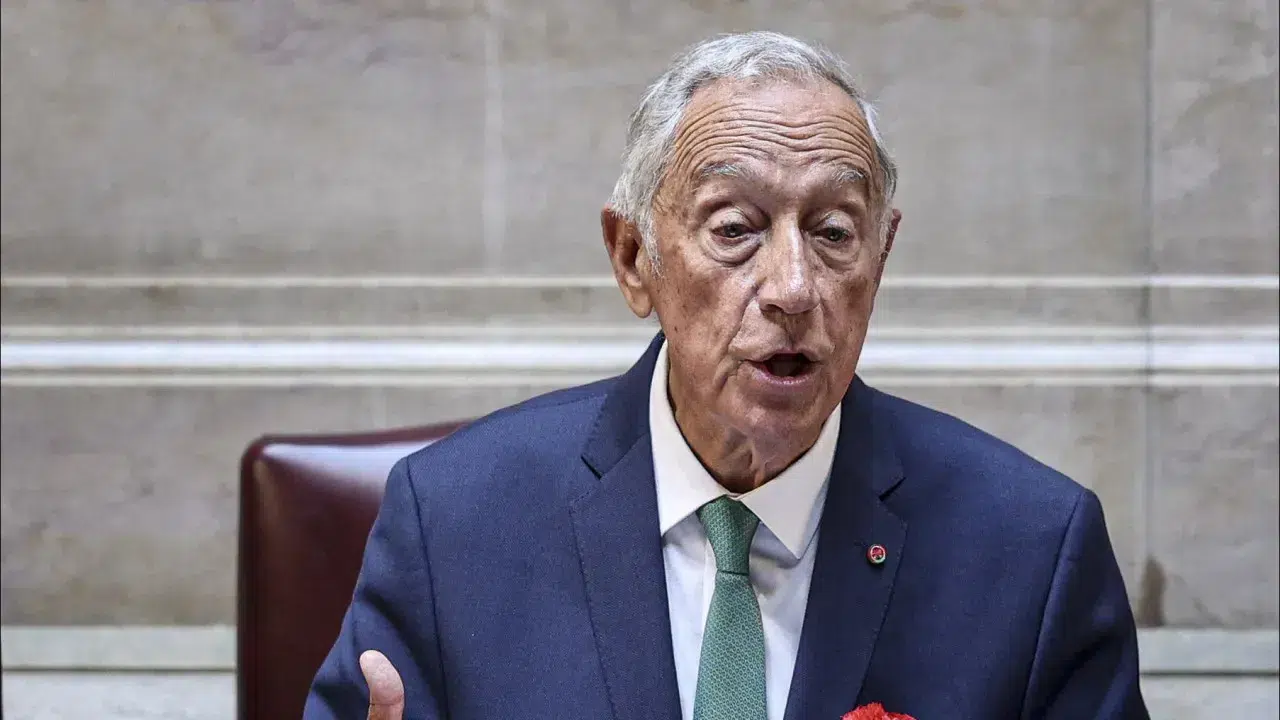
The head of state, nearing the end of his second and final presidential term in March of the following year, will deliver an address before departing for the Vatican to attend the Pope’s funeral. This occurs amid an internal pre-election campaign for the anticipated legislative elections on May 18.
In 2024, the 50th anniversary of the April 25th Revolution was observed shortly after the inauguration of the minority government formed by the PSD/CDS-PP, led by Luís Montenegro. His government fell in March of this year when a confidence motion submitted to parliament was rejected, amid a political crisis sparked by issues related to the prime minister’s family business.
During his speech a year ago, Marcelo Rebelo de Sousa invoked key figures in Portuguese democracy over the past five decades, including Eanes, Soares, Sá Carneiro, Cunhal, Freitas do Amaral, and Cavaco Silva. He asserted that nothing in contemporary European history compares to the Carnation Revolution in terms of the changes it engendered.
On the occasion of the 50th anniversary of April 25th, he urged for the “humility and intelligence to always prefer democracy, even if flawed, over dictatorship.”
Later, Marcelo Rebelo de Sousa participated in a joint session with the heads of state from Angola, Cape Verde, Guinea-Bissau, Mozambique, São Tomé and Príncipe, and East Timor, celebrating the “nations and fraternal peoples” of Portugal’s former colonies “united by the April 25th.”
“From the colonial past, we all retain memories and lessons that will guide us into the future,” he stated during a session held at the Centro Cultural de Belém in Lisbon.
In 2023, the Assembleia da República commemorated April 25th in the presence of the Brazilian President, who previously delivered a welcome address during which the IL left nearly all its seats vacant, and Chega displayed protest banners and made noise against Lula da Silva.
Marcelo Rebelo de Sousa argued that the Brazilian President’s participation was meaningful, as Brazil was a “trailblazer in decolonization.” He emphasized that Portugal must not only “apologize, rightly,” but also “assume responsibility” for its colonial past.
On Liberty Day 2022, against the backdrop of the war in Ukraine, which had been invaded two months earlier by Russian forces, the President dedicated his speech to the Portuguese Armed Forces, urging for “more essential resources.”
Since taking office in 2016, the former PSD president has attended the April 25th commemorations with a carnation in hand, although last year he opted to wear the revolutionary flower in his lapel.
Upon his debut at these ceremonies, he stated that his red carnation was a gift from young people, symbolizing the “much that remains to be done,” and called for “sector-specific regime agreements.”
In 2017, he praised “victories” in finance and the economy but called for “greater wealth creation and fair distribution,” as well as more transparency and efficiency from political authorities to prevent “so-called anti-institutional populisms.”
In 2018, he urged the renewal of the political system and warned that voids left by institutional figures fuel “dangerous temptations of populist appeals and even messianic or providentialist Sebastianisms.”
In 2019, he demanded “more ambition,” positioning himself as a voice for the youth, and warned that new generations reject “chronic clientelism and delays.”
The April 25th commemoration in 2020, during the COVID-19 pandemic, marked the first such occasion. He defended the celebration of the Carnation Revolution, which was contested by CDS-PP and Chega at the time.
In 2021, he focused his intervention on Portugal’s colonial past, urging that history be faced “without fears or complexes,” seeking to unite and counter intolerance, with an understanding that different experiences and perspectives exist regarding that era.